
The Ultimate Guide to the High and Tight: A Man's Guide to an Iconic Military Cut
The Ultimate Guide to the High and Tight: A Man's Guide to an Iconic Military Cut
Discover the A-Z of the high and tight military haircut. From its USMC origins and modern variations like the fade to how to get it and style it, this is your ultimate guide to a sharp, confident, and timeless look.*
The world of men's hairstyles is vast, but few cuts command the same level of respect and recognition as the high and tight military cut. It’s a style that's unapologetically masculine, incredibly practical, and steeped in a rich history of discipline and honor.
But this iconic cut has long since jumped the fence from the barracks to the boardroom and the streets. It's now a mainstream staple for men who value clean lines, low maintenance, and a sharp, confident appearance.
Whether you're considering it for its practicality or its powerful aesthetic, this guide will walk you through everything you need to know about the high and tight.

Part 1: The History and Culture of the High and Tight
The story of the high and tight is rooted in pure military pragmatism. Its primary association is with the United States Marine Corps (USMC), where it became so ubiquitous that it led to the nickname "Jarheads."
The reasons for its adoption were simple and practical:
- Hygiene: In close quarters and difficult field conditions, short hair was easier to keep clean and less likely to host lice.
- Uniformity: It created a uniform, disciplined appearance among the troops.
- Helmet-Friendly: The short sides and back prevented itching and discomfort under a combat helmet.
From these practical origins, the high and tight became a symbol of the elite, disciplined soldier. This powerful image eventually caught the eye of the civilian world, and the haircut was adopted by athletes, law enforcement officers, and everyday men who admired its clean, no-nonsense appeal.
Part 2: Why Choose the High and Tight? The Unbeatable Advantages
If you're on the fence, here are the compelling reasons why the high and tight remains one of the most popular men's haircuts today.
It’s Incredibly Low-Maintenance
This is the ultimate "wash and go" hairstyle. There's no complex morning routine. A quick towel dry and you're ready to face the day. The only commitment is a regular trim every 2-4 weeks to keep the lines sharp.
It Broadcasts Confidence
The clean, sharp lines of a high and tight accentuate your facial features, particularly the jawline and cheekbones. It projects an image of discipline, neatness, and self-assurance that is hard to ignore.
It's Extremely Versatile
Don't let its military roots fool you; the high and tight is a chameleon. It looks just as sharp with a business suit as it does with a gym shirt. It's the perfect choice for a man with an active lifestyle who needs a haircut that performs in any environment.
A Smart Solution for Thinning Hair
For men experiencing thinning on top or a receding hairline, the high and tight can be a game-changer. By taking the sides down extremely short, you reduce the contrast between the thicker and thinner areas of your hair, creating the illusion of more density on top.
Part 3: The Many Faces of the High and Tight: Finding Your Style
The "high and tight" isn't a single haircut but a family of styles. Here are the most popular variations to show your barber.
1. The Classic High and Tight
This is the original. It features a stark, non-faded contrast between the buzzed (or shaved) sides and the slightly longer strip of hair on top. It’s bold, sharp, and true to its military heritage.
2. The High and Tight Fade
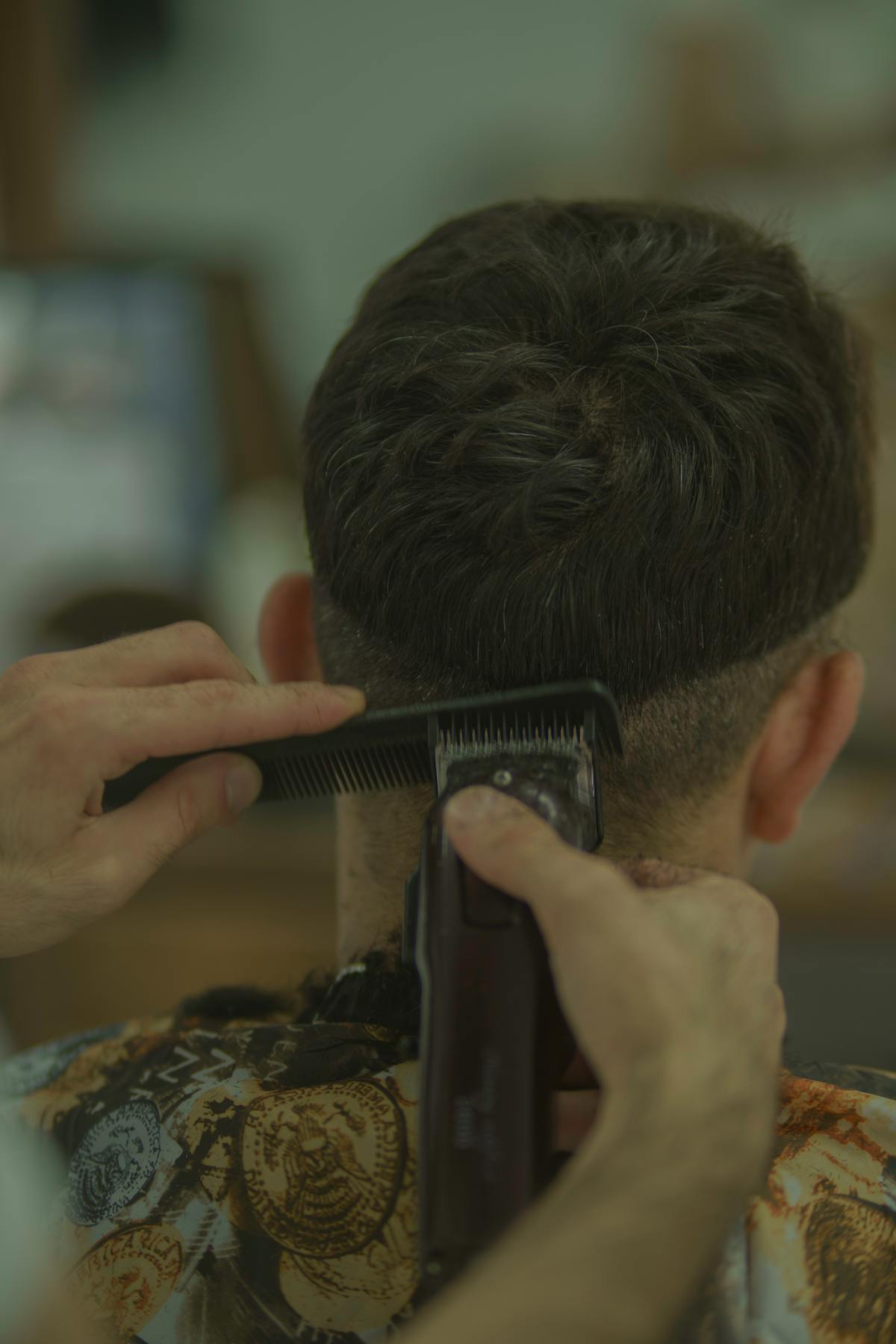
This is the most popular modern interpretation. Instead of a hard line, the hair on the sides and back gradually "fades" from skin-short at the bottom to slightly longer as it moves up to the top section. The result is a smoother, cleaner, and more refined look. You can ask for a skin fade for the sharpest look.
3. The High and Tight with a Longer Top
If you want more styling flexibility, this is your go-to. The sides are kept traditionally short, but the top is left with a few inches of hair. This allows you to style it into a quiff, a side part, or a textured, messy look.
4. The High and Tight Crew Cut
A more conservative but equally sharp option. The sides are high and tight, while the hair on top is clipped short but follows the contour of the head, getting slightly longer toward the front. It’s a timeless, athletic look.

Part 4: The Practical Guide: How to Get the Perfect Cut
Getting the right high and tight is all about clear communication.
Talking to Your Barber
Don't just say "give me a high and tight." Be specific. Use this language:
- For the Sides: "I'd like a high and tight. Please use a #0 or a #1 guard on the sides and back." If you want it shaved, say "a skin fade on the sides."
- For the Top: "Please leave a #3 (or #4, #5, etc.) guard length on top." Or, "Please leave about an inch of length on top to style."
- For the Blend: "I'd like a high fade, so the blend starts high up on my head." Or "I want a hard part with no fade for a classic look."
Pro Tip: The best way to get what you want is to bring a picture. Find a photo of the exact variation you like from this guide.
DIY: A Basic Step-by-Step
Feeling brave? Here’s a simplified DIY guide.
- Get Your Tools: You need a good pair of hair clippers with multiple guard attachments.
- Start with the Sides: Attach a short guard (e.g., #1). In an upward motion, cut the hair on the sides and back, stopping at the point where your head begins to curve (the parietal ridge).
- Cut the Top: Switch to a longer guard (e.g., #4) and cut the hair on top.
- Blend (The Hard Part): Use an intermediate guard (e.g., #2) to soften the line between the top and sides. Use a "scooping" motion with the clippers to create a smooth transition. This takes practice!
- Clean Up: Use a trimmer or the unguarded clipper to clean up your neckline and around your ears for a sharp finish.
Part 5: Daily Styling and Maintenance
Even though it's a low-maintenance cut, a little product can make a big difference, especially if you have a longer top.
Choosing Your Product
- Matte Wax or Clay: Perfect for creating a textured, natural, matte finish. Best for messy styles or adding volume without shine.
- Pomade: Use a water-based pomade for a slicked-back look or a defined side part. It offers more hold and shine.
- Styling Cream: For a light, natural hold that just tames frizz and adds a bit of control.
Quick Styling Techniques
- Textured and Messy: Take a pea-sized amount of matte wax, rub it between your palms, and work it through your dry hair with your fingertips, pulling the hair up and in different directions.
- The Modern Quiff: Apply pomade or cream to damp hair and use a comb or your fingers to push the front up and back.
- The Classic Comb-Over: Apply pomade and use a comb to create a clean side part, combing the top neatly to one side.
Is the High and Tight for You?
The high and tight is more than just a haircut; it's a statement. It's a nod to a legacy of strength while being perfectly adapted for the modern man. It's clean, manageable, and effortlessly stylish.
If you're ready for a change that will simplify your routine and sharpen your look, it’s time to give this timeless classic a try. Find your favorite variation, save the picture, and book that appointment with your barber.